
From Riso Ink Tubes to Bone Folders
Turning a Difficult Waste Stream into a New Product
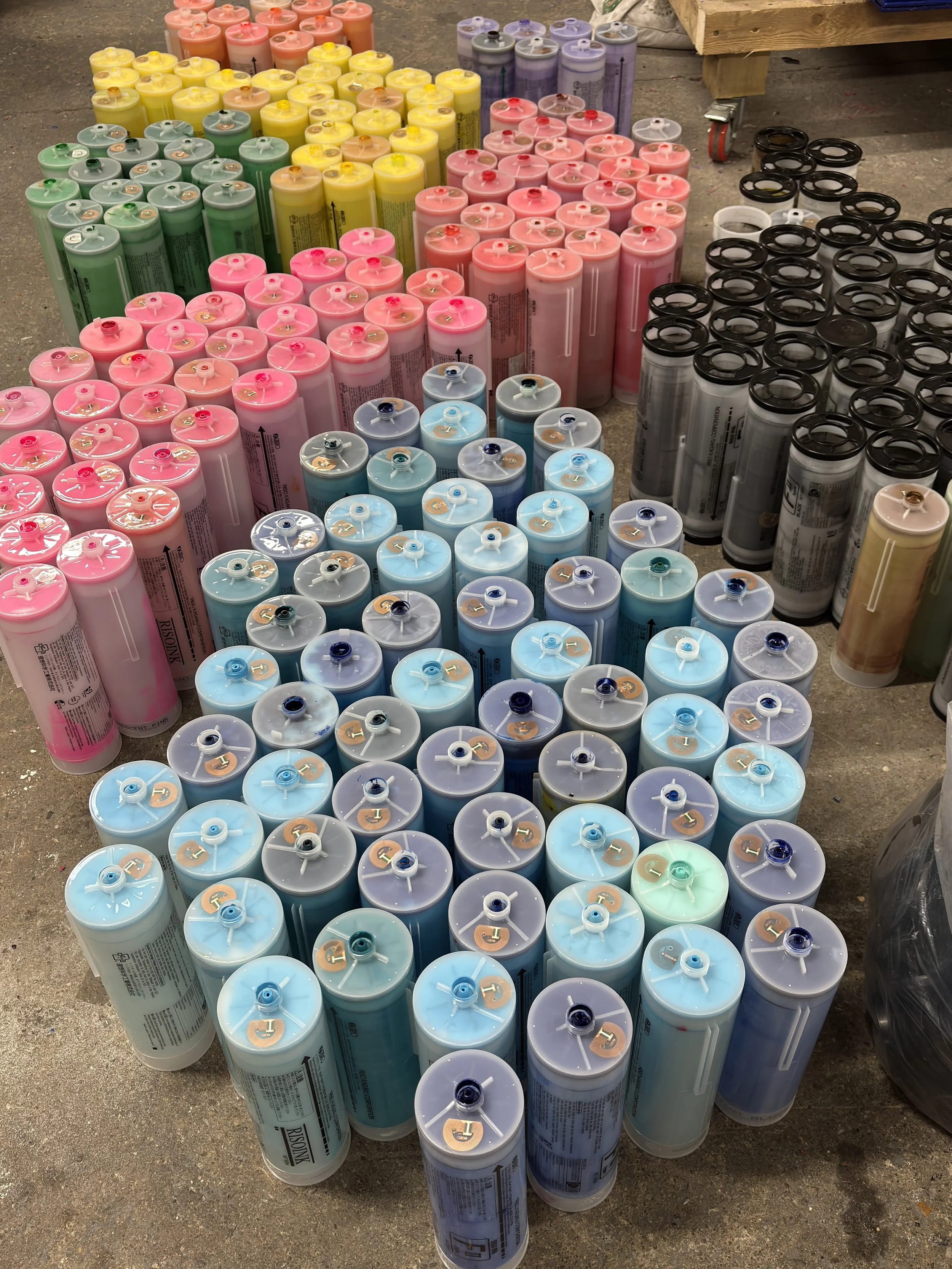
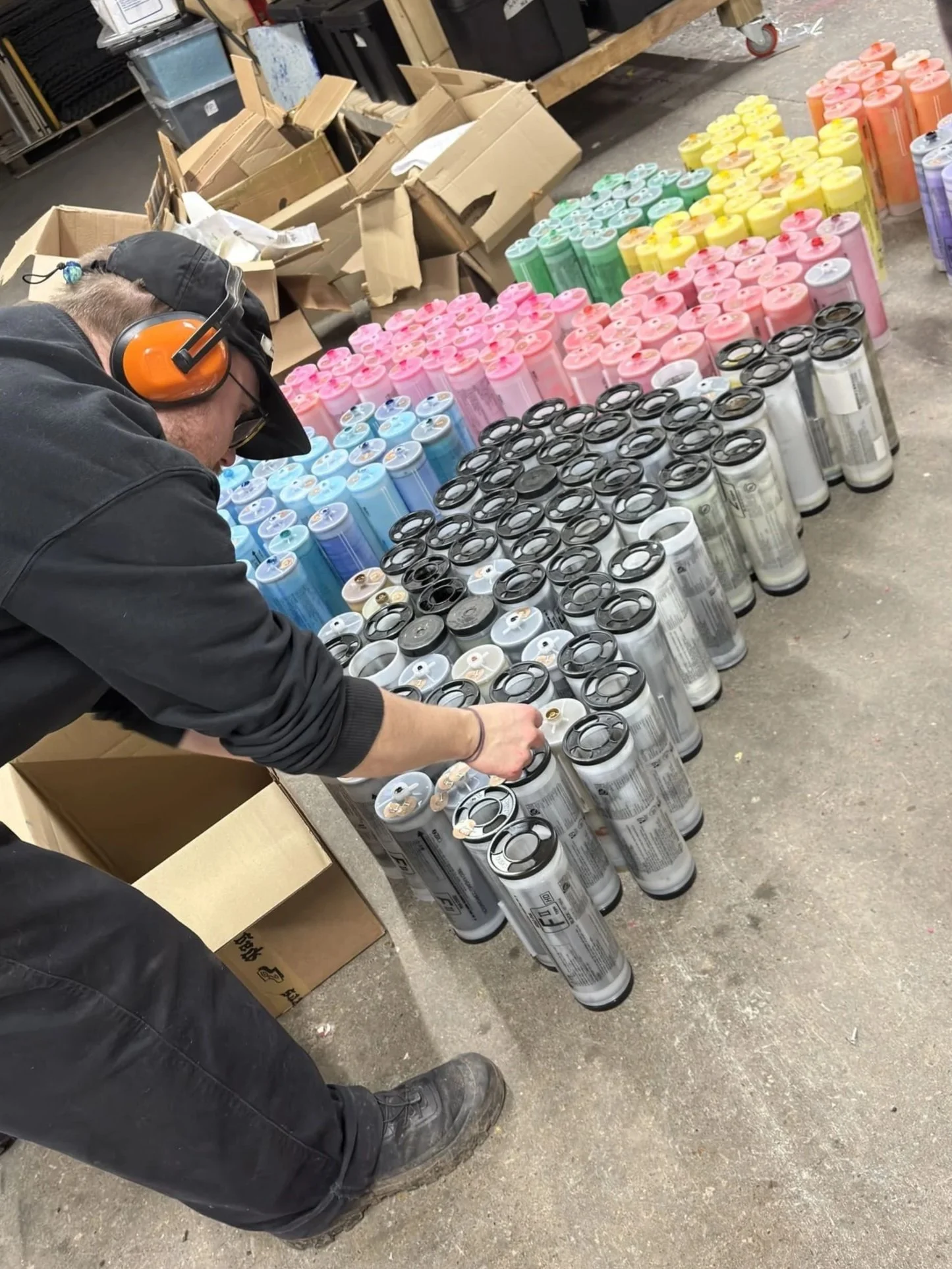
When Nottingham based print studio Dizzy Ink came to Future Makers, they had a material problem: used Riso ink tubes were difficult to recycle and still contained ink residue. Craig brought the material to our Nottingham studio to explore whether it could be processed into something useful.
Printers across the UK face the same challenge and had been stockpiling the tubes while looking for a practical way to give the material a new use. Future Makers offers a solution: the used tubes can be processed into usable recycled material.
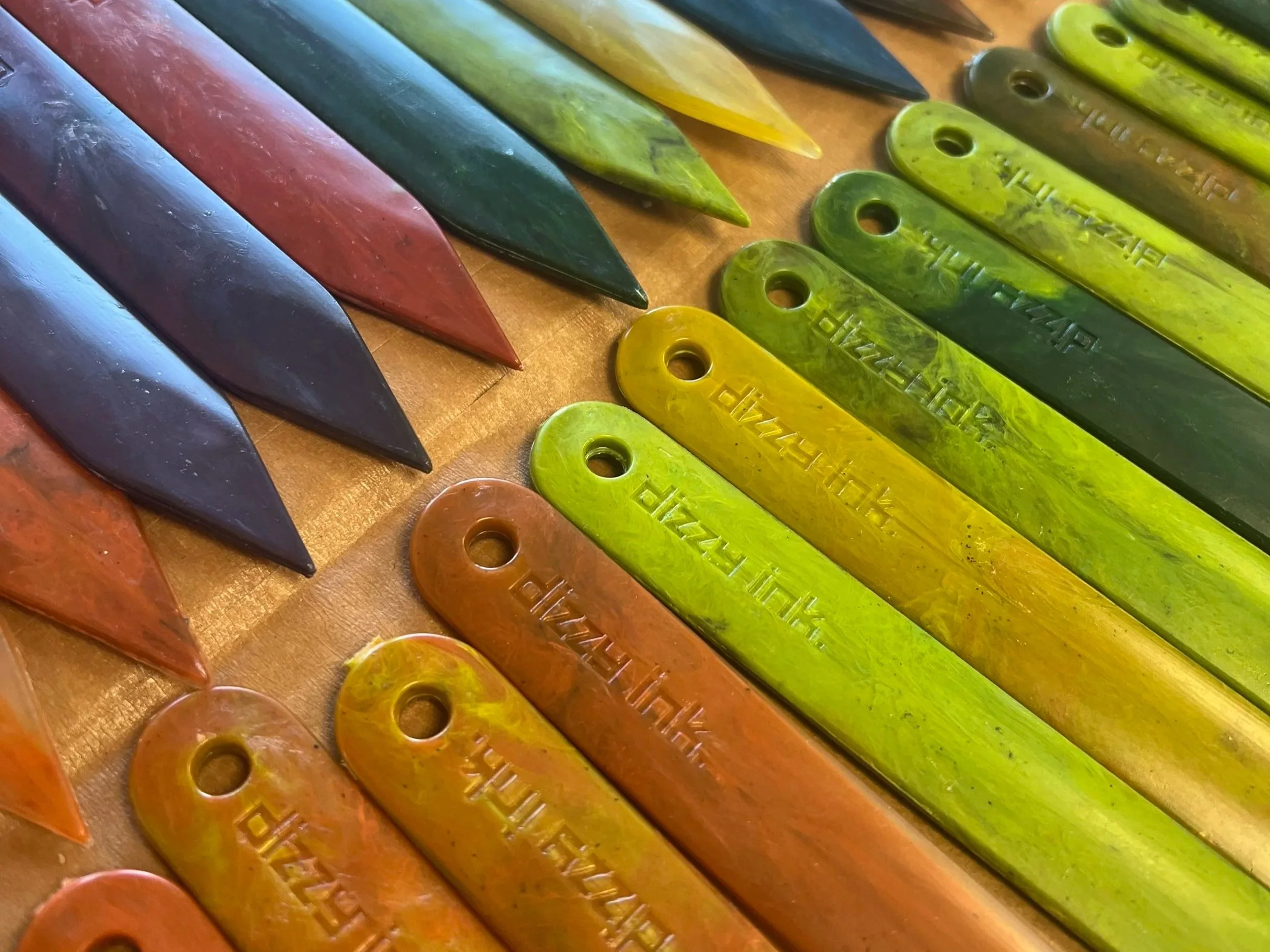
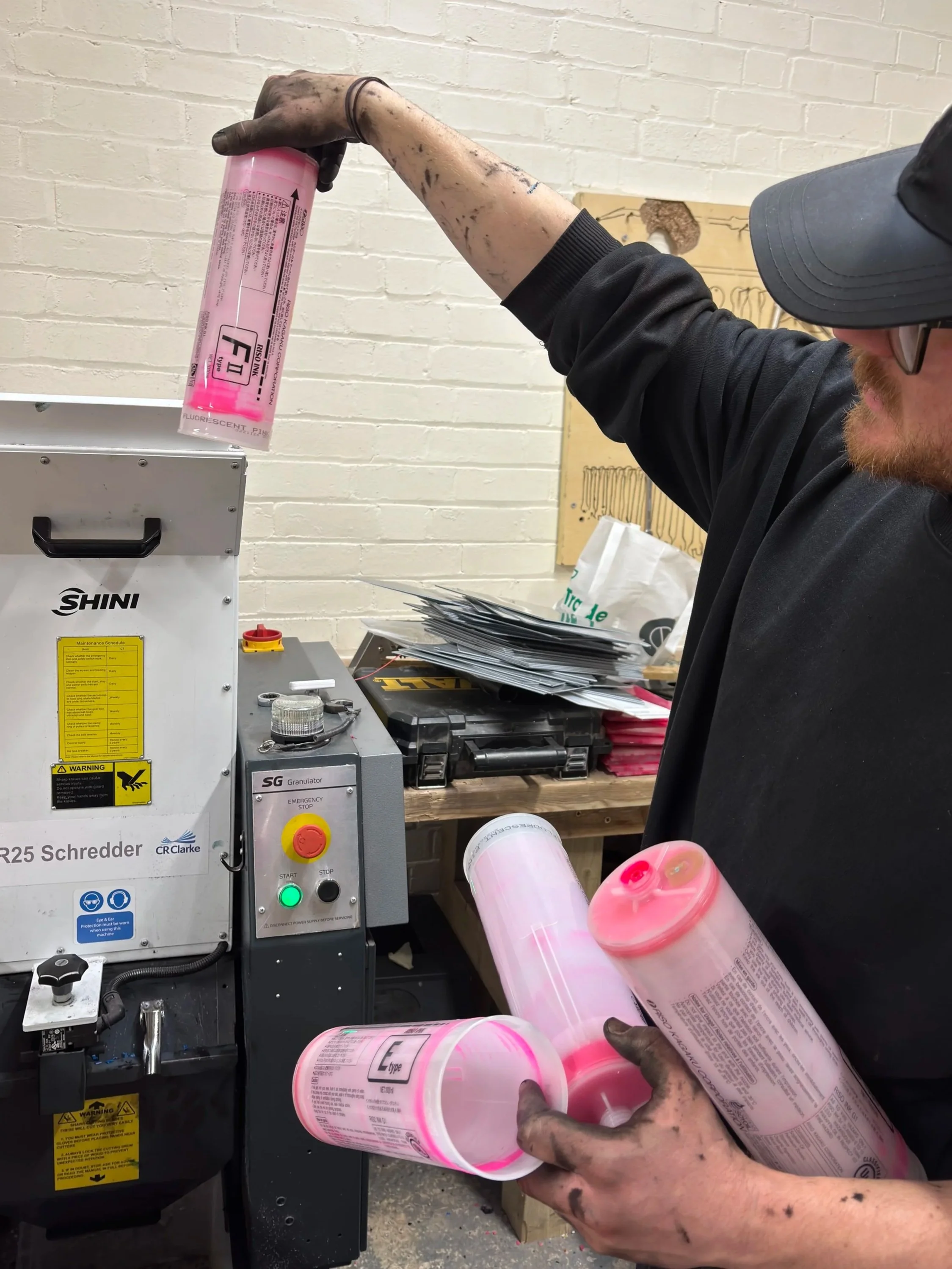
From waste stream to test material
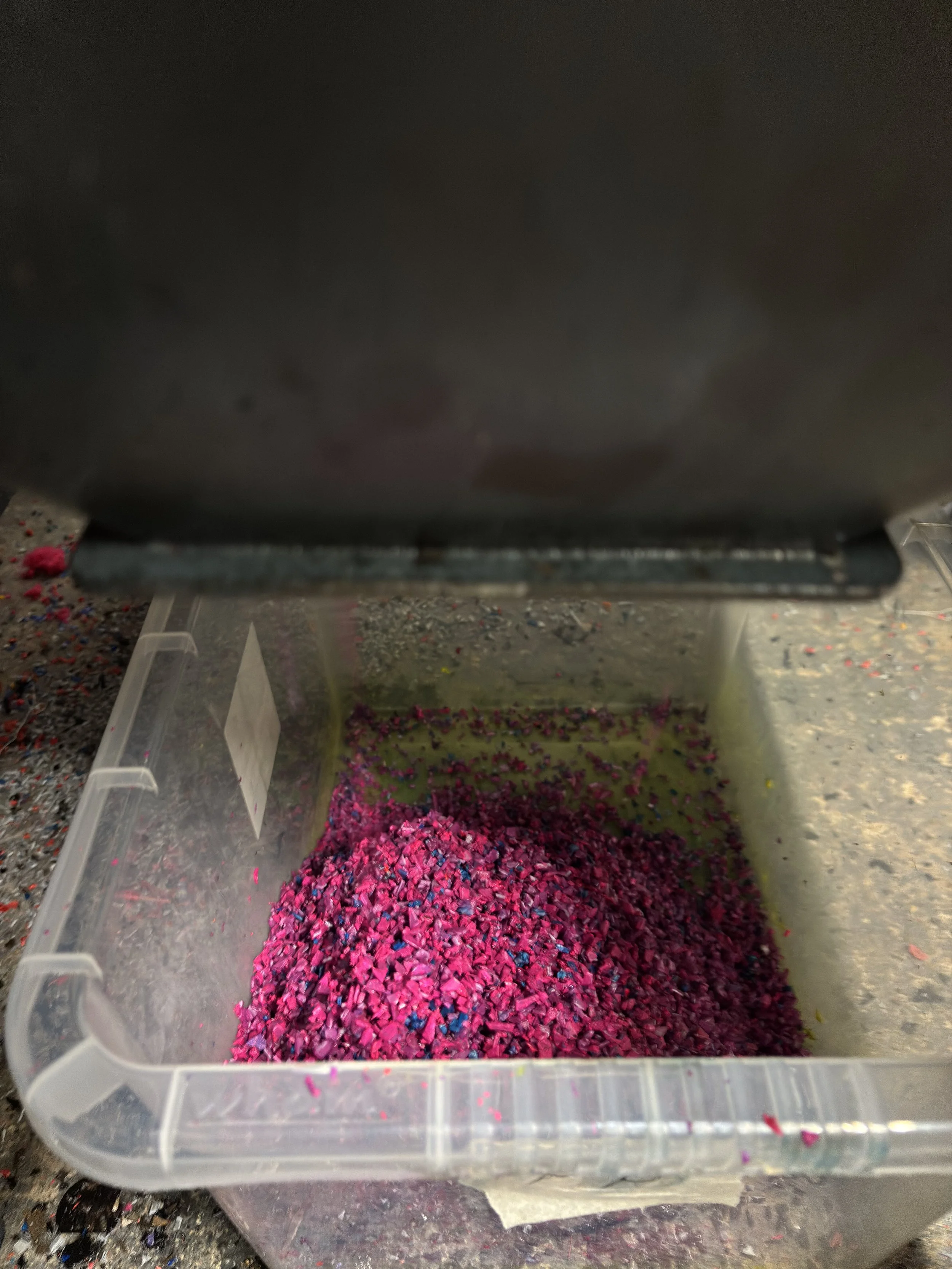
The tubes were granulated into colourful flakes, ready for processing into recycled plastic sheets.
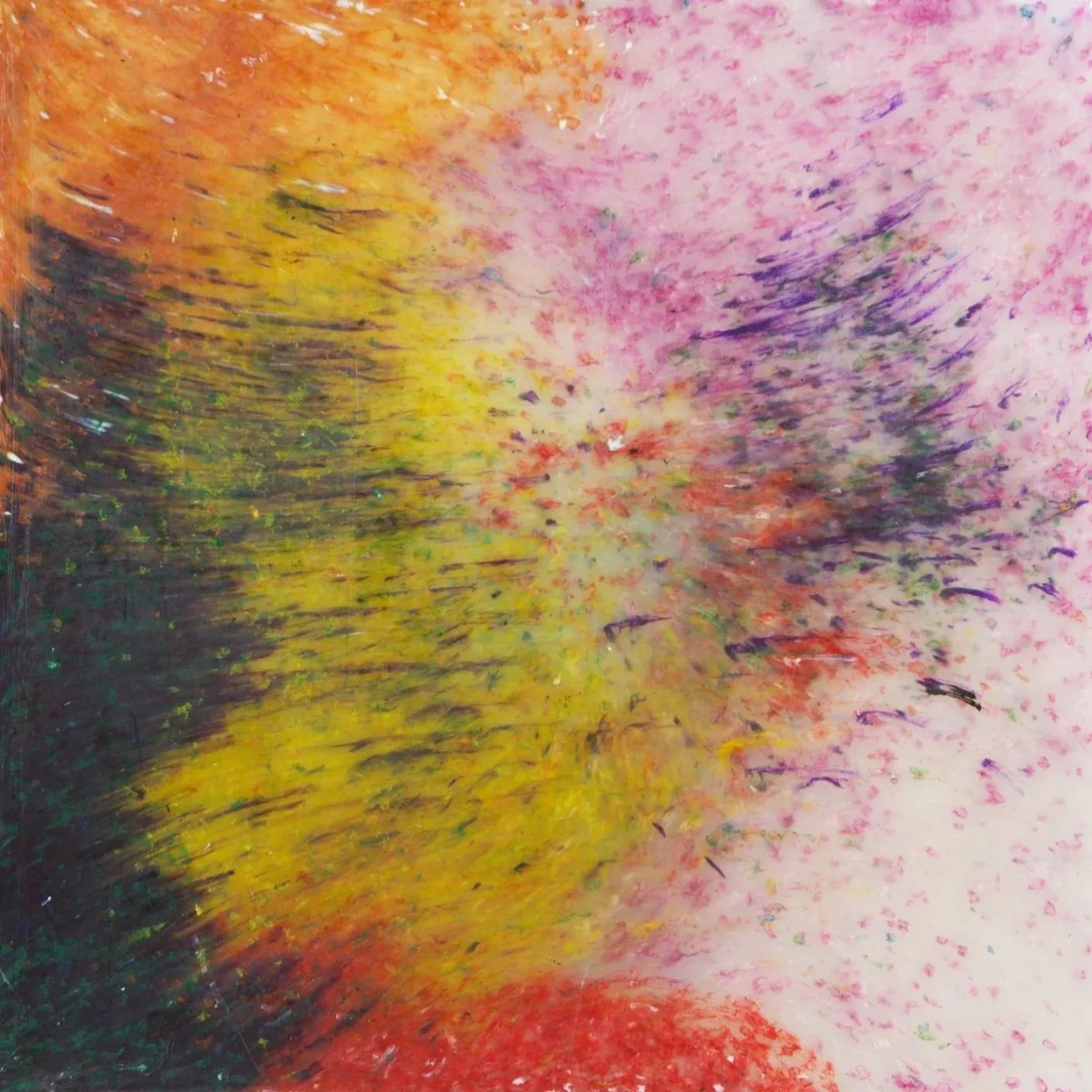
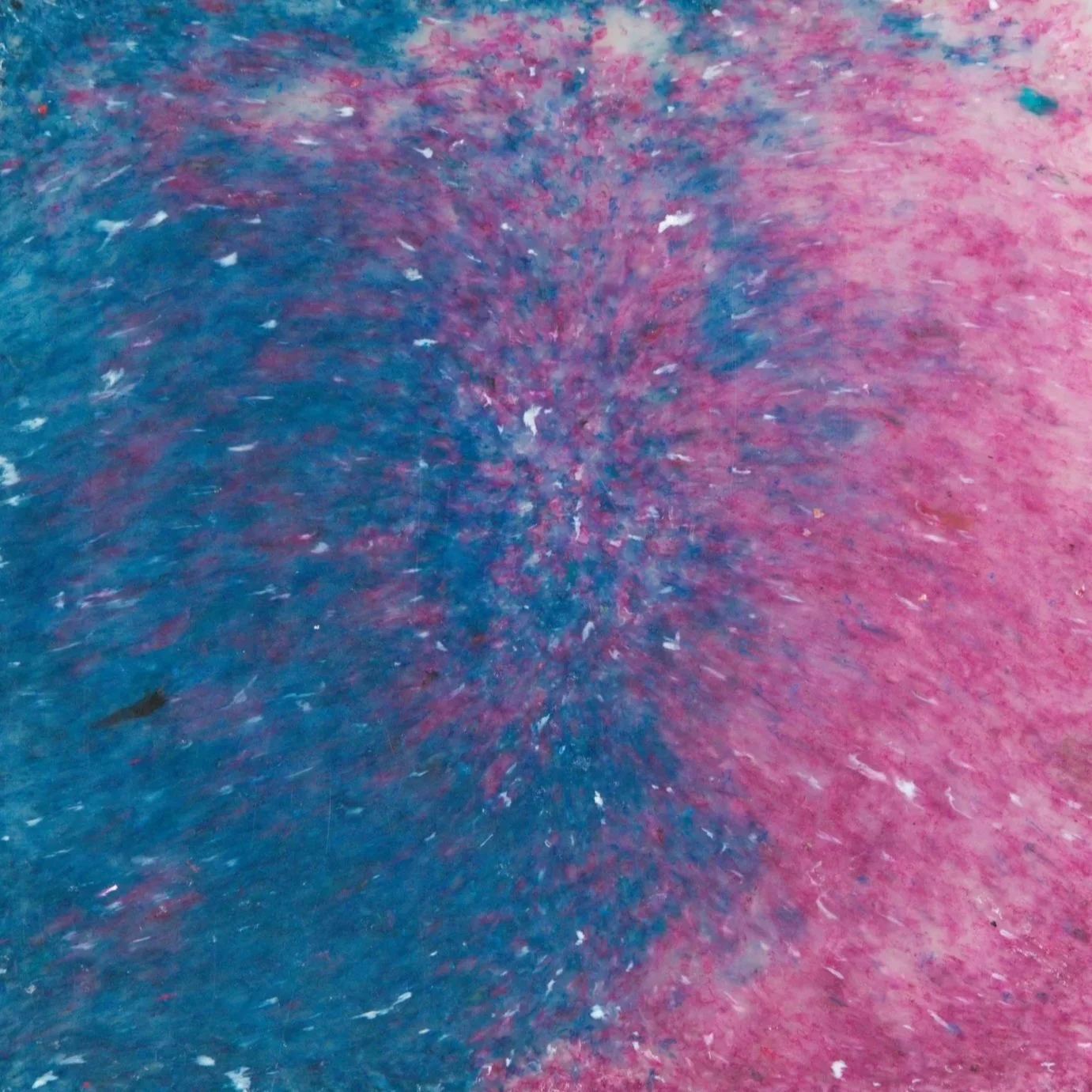
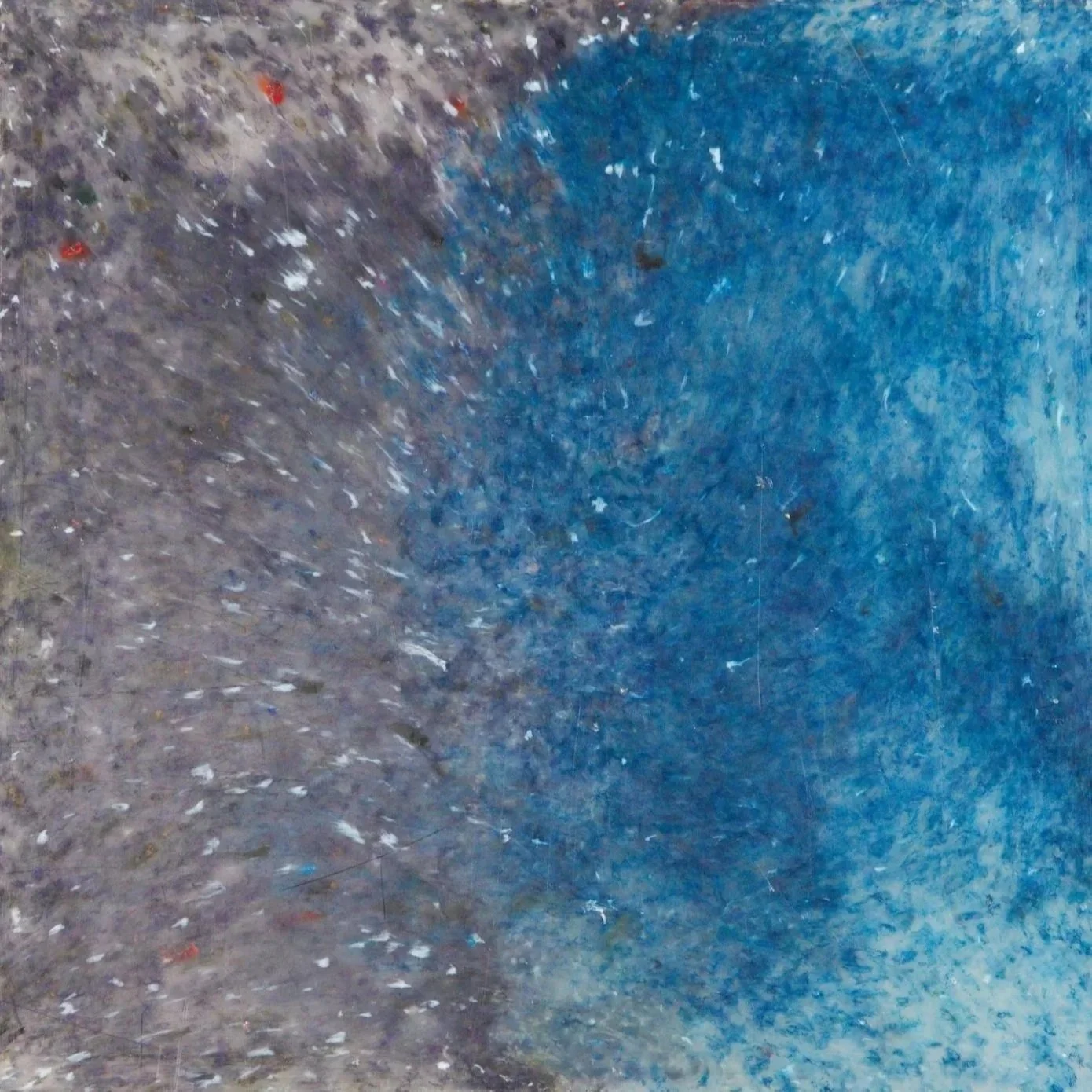
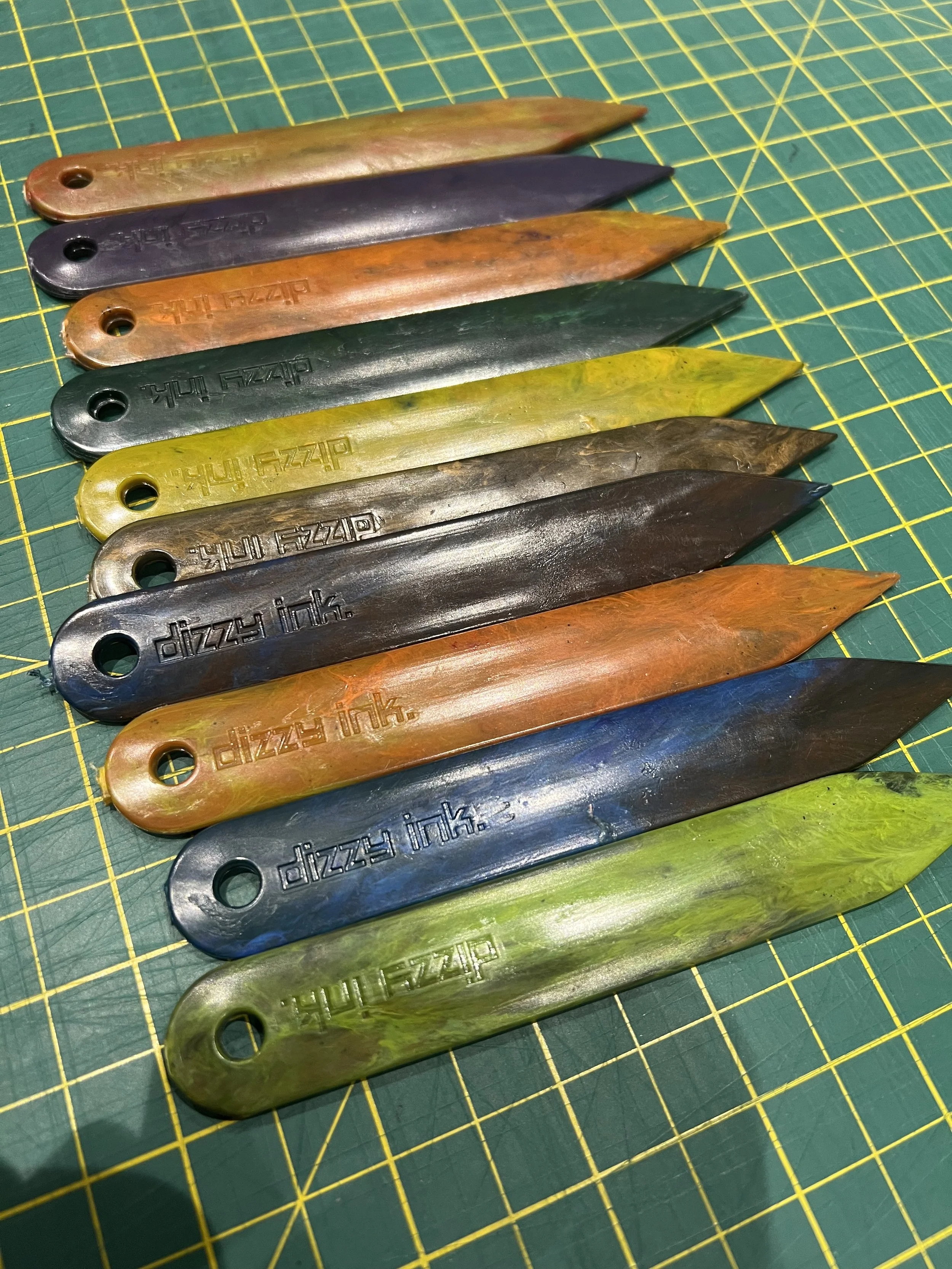
We processed the material into test sheets, experimenting with the different colours and characteristics of the plastic. The resulting sheets had a distinctive, beautifully varied appearance, with each sheet taking on its own material character. Craig then had the sheets CNC cut into bone folder shapes, creating the first prototypes.
Testing the market
Rather than committing immediately to a large production run, Craig used the prototypes to test the idea with Dizzy Ink's customer base.
The presale quickly took off, giving him the confidence to invest in a custom branded moulding tool and move from prototype to production using injection moulding.
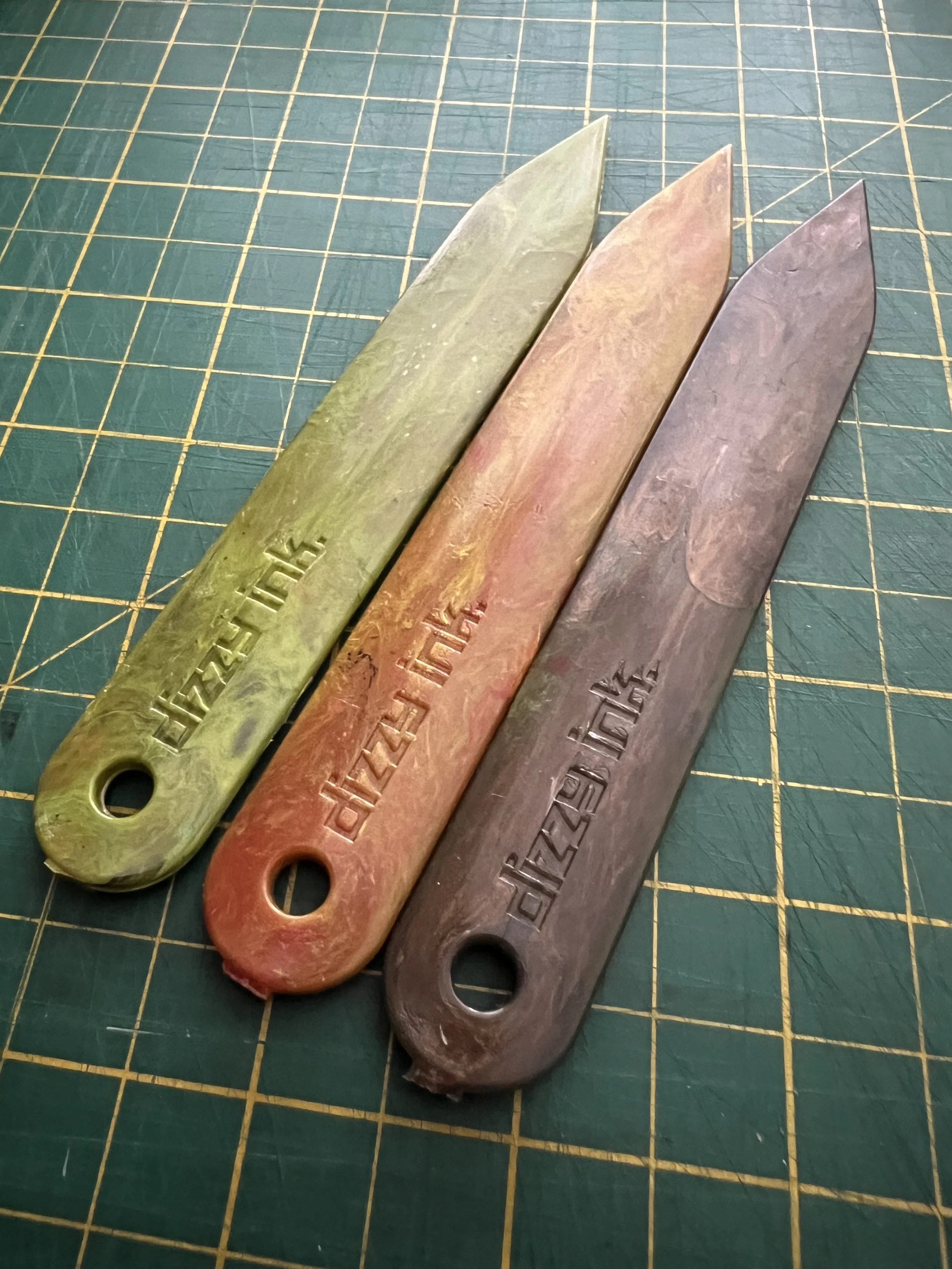
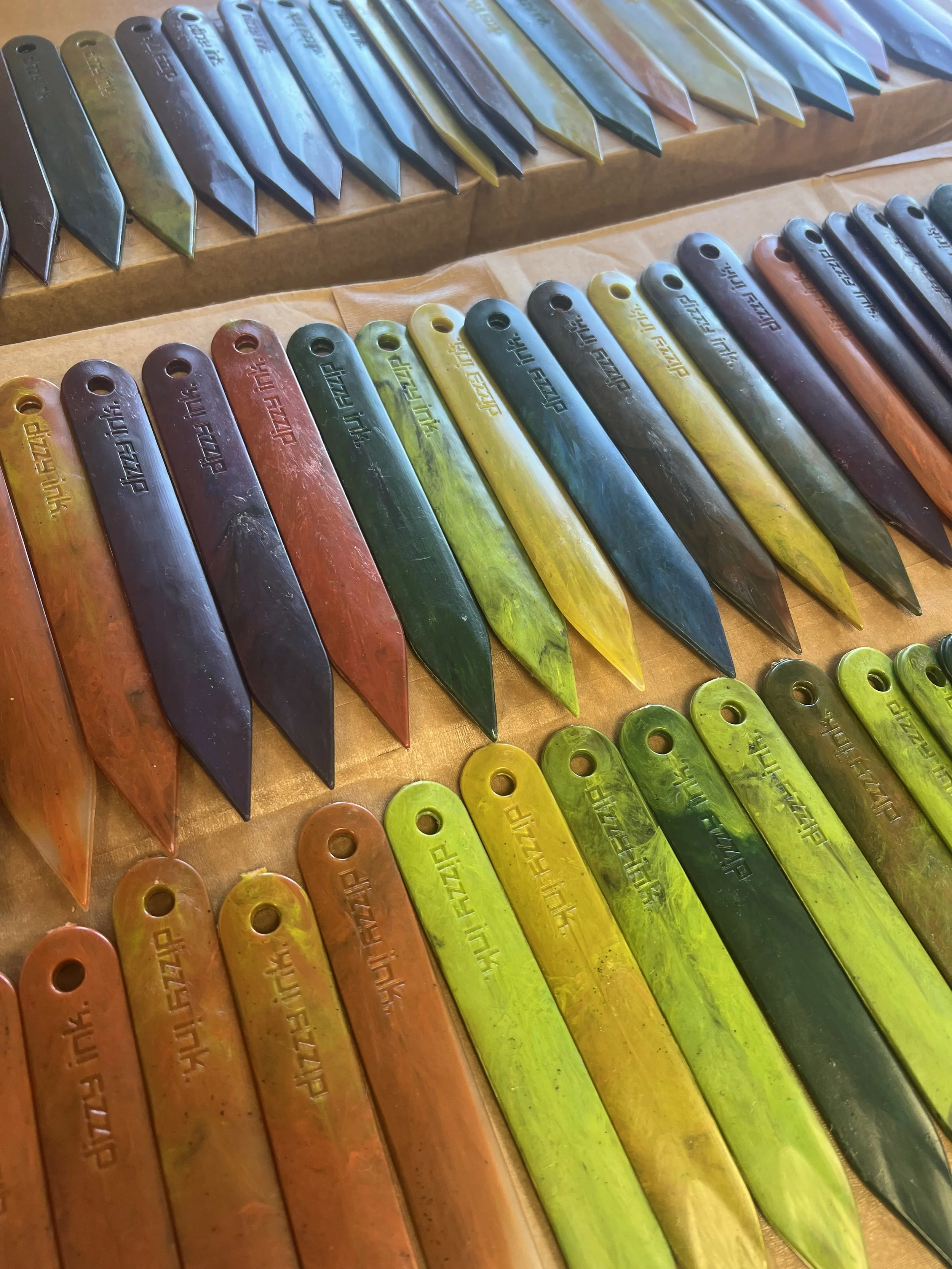
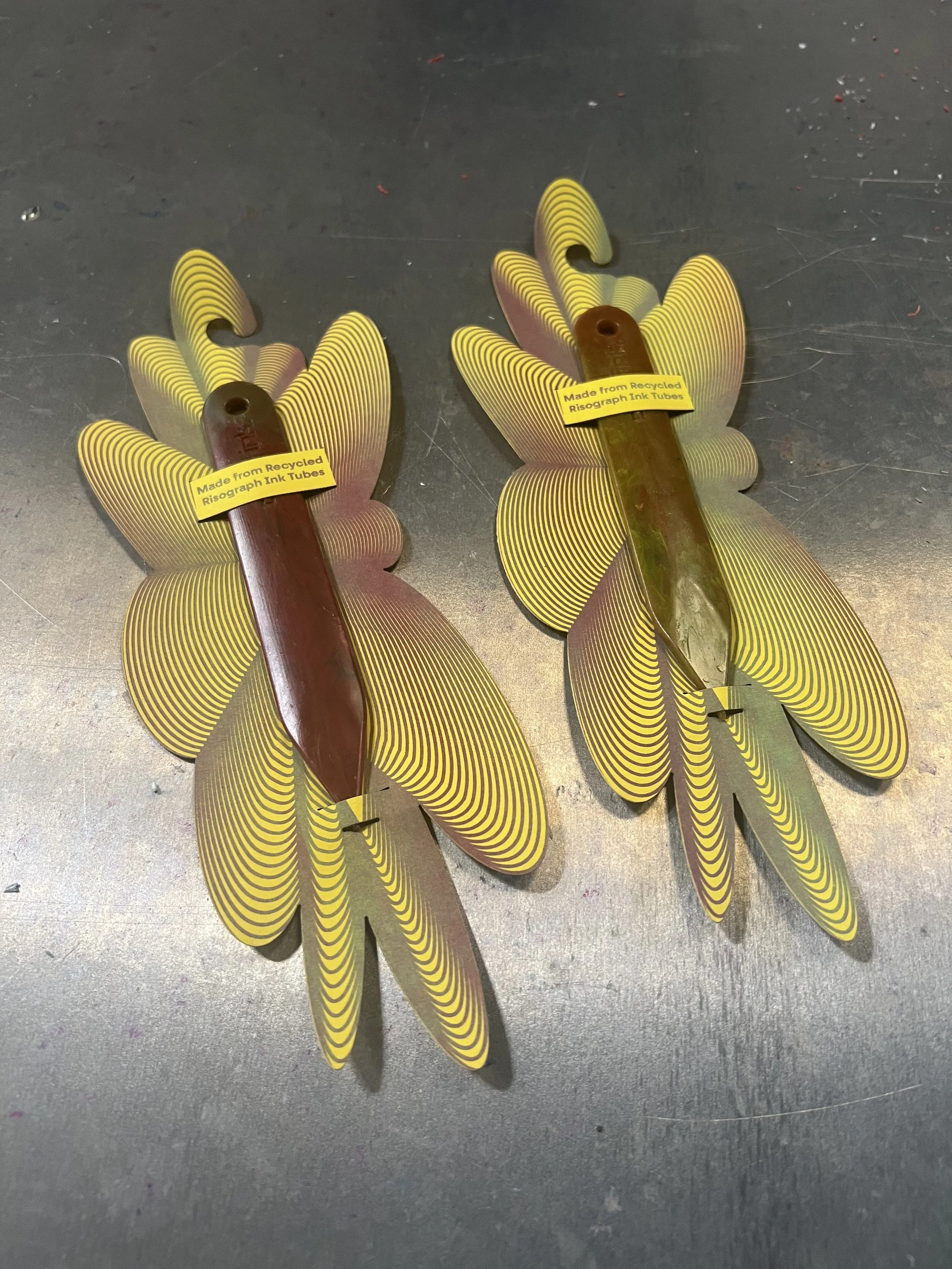
The result was a first run of 100 bone folders, hand finished and sold to Dizzy Ink's customers.
From waste problem to commercial opportunity
The project created a practical route for Dizzy Ink to turn its used Riso ink tubes into a new product for its customers.
For Future Makers, the project demonstrates how material processing, sheet development, CNC prototyping, tooling, injection moulding and hand finishing can be combined to take a waste material from initial testing through to a commercially viable product.
Have a difficult waste stream to explore?
We work with businesses to develop new applications for waste materials through material testing, prototyping and fabrication.
Images: Craig / Dizzy Ink